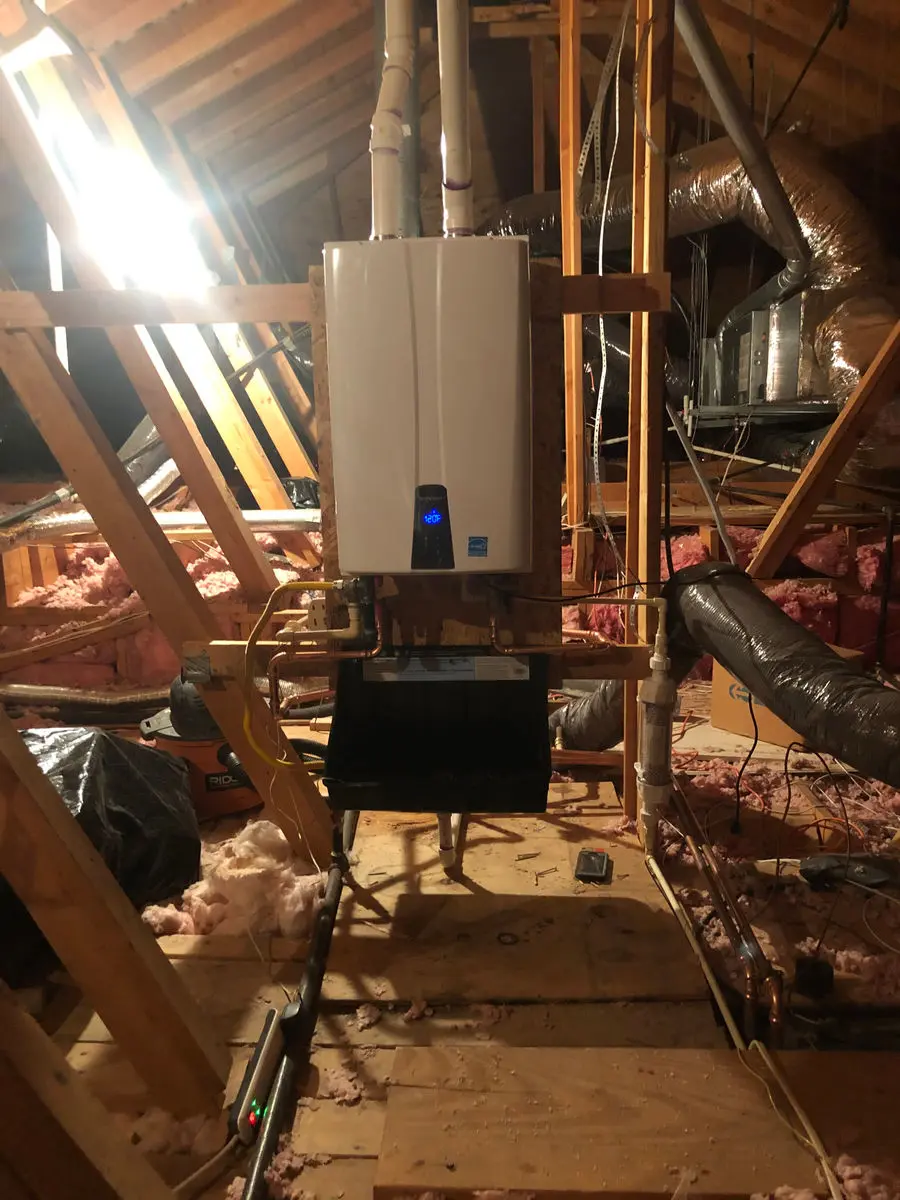
Attic water-heater replacement requires careful planning for access, drainage, venting, protection, capacity, and code compliance.
Why Attic Installation Changes the Job
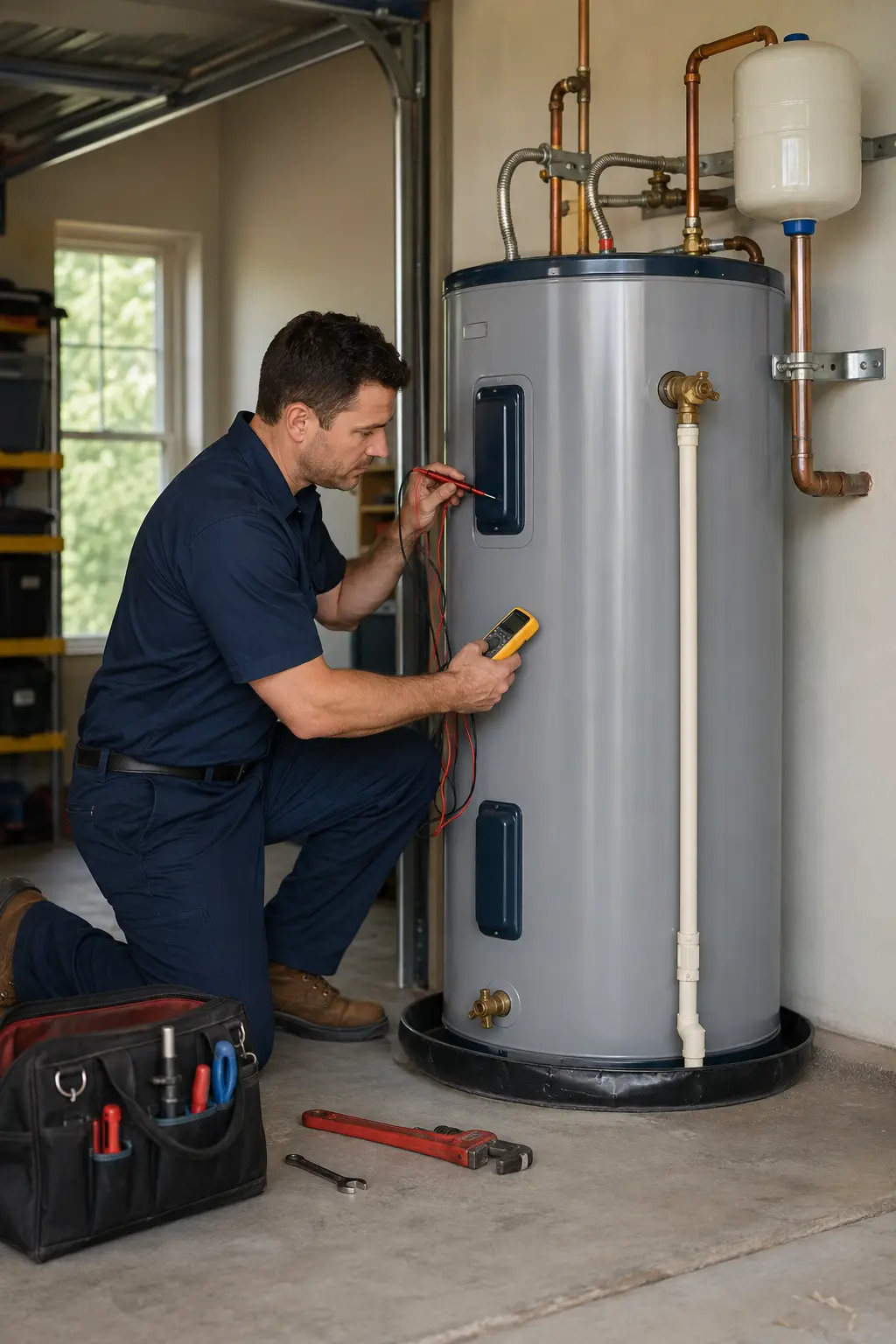
Removal and replacement must account for stairs, openings, finished surfaces, equipment weight, ventilation, and the occupied rooms below. The installation also needs appropriate protection if a future leak occurs.
- Drain pan and approved drain routing
- Stable platform and secure connections
- Proper venting or electrical supply
- Thermal expansion control when required
- Safe service clearances and shutoffs
What Determines Cost
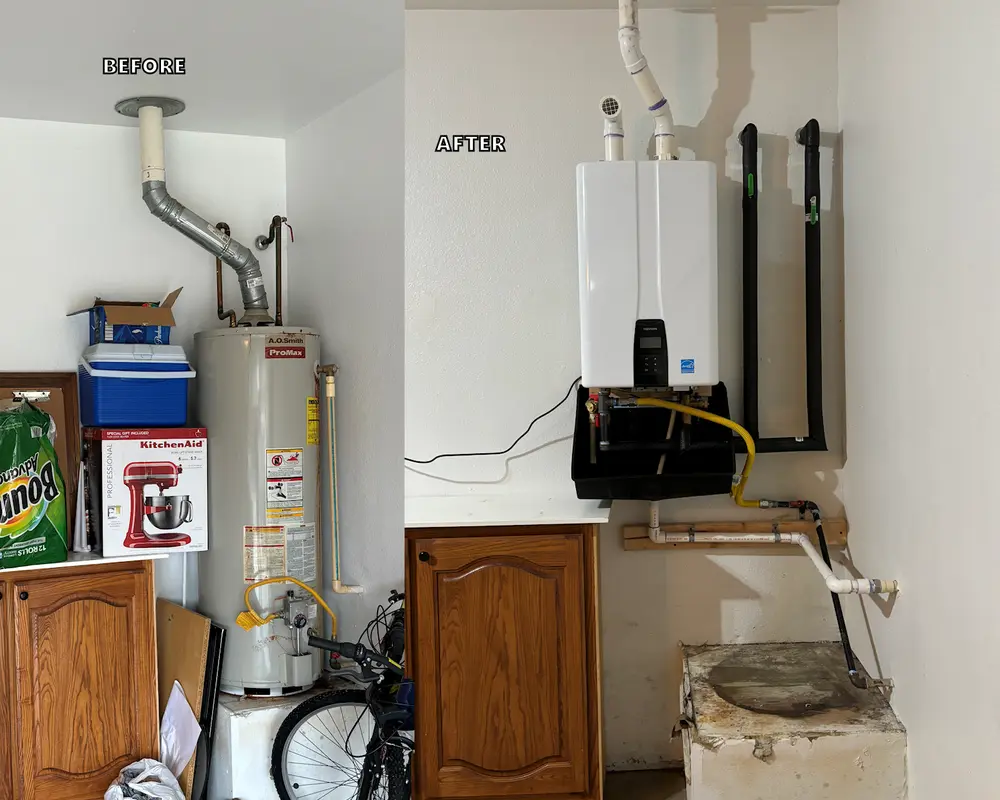
The equipment is only one part of the price. Capacity, fuel type, attic access, code corrections, disposal, venting, drain routing, platform work, and conversion between tank and tankless systems all affect the final scope.
An on-site evaluation is the reliable way to price the installation.
Choose for the Household, Not the Label
Tank systems often have a lower initial cost and familiar replacement path. Tankless systems can provide long-duration hot water and free floor space, but require correct gas, venting, electrical, and water-quality planning. Proper sizing matters in either case.
Replace Before the Emergency
If an older attic unit shows corrosion, leakage, unreliable heating, or repeated repair needs, planned replacement is usually less disruptive than responding after a tank failure.
Need help with this problem?
Get a Clear Diagnosis and Practical Options.
This article provides general plumbing information and cannot diagnose a specific property. Conditions, codes, access, and repair requirements vary. For a suspected gas leak, leave immediately. From a safe location, call your gas utility, then call MRC Plumbing Solutions at 972-357-1400. Stay away until the utility says it is safe. For fire, injury, or other immediate danger, contact local emergency services.