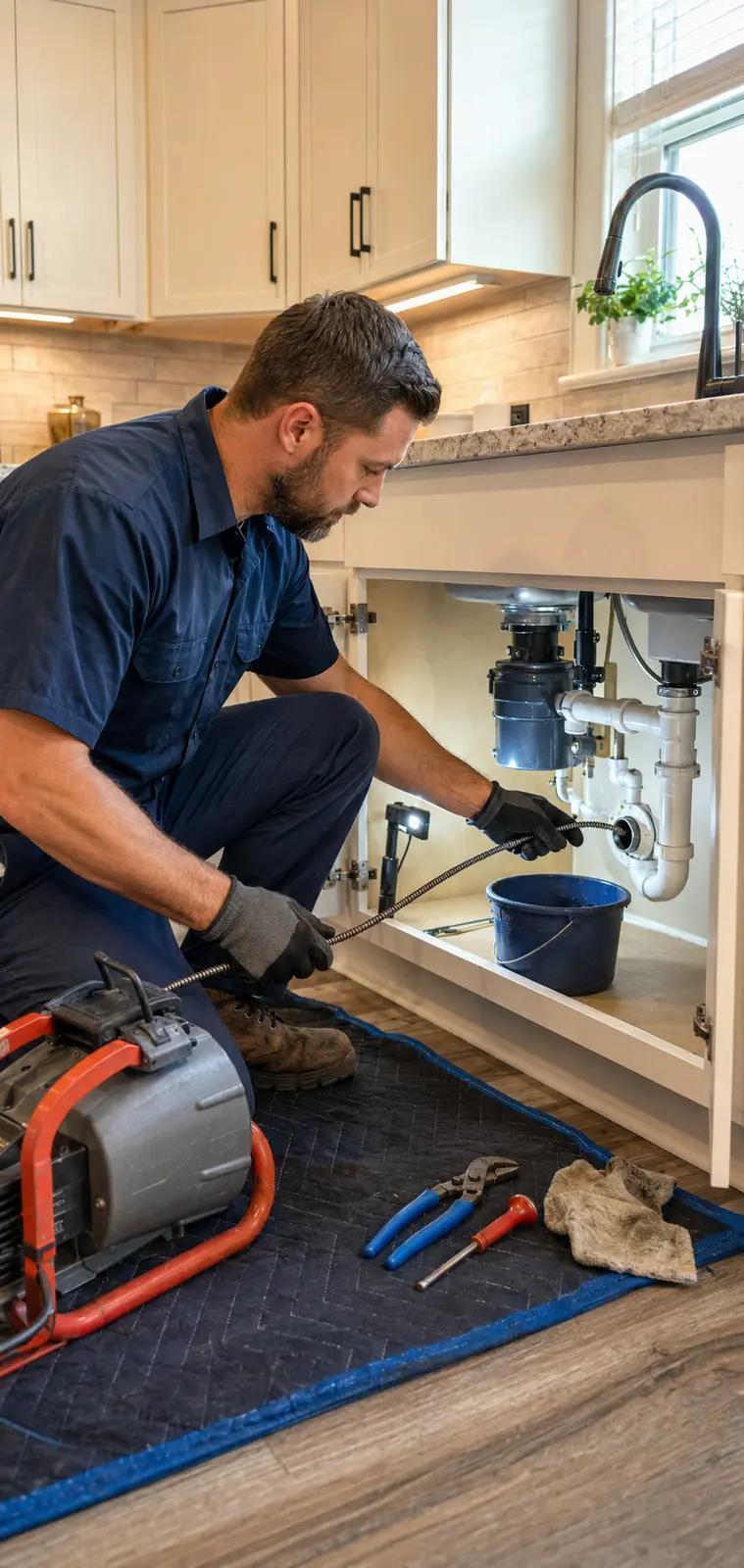
A slow drain is usually the first visible warning of buildup, a developing blockage, or a larger sewer-line problem.
A Slow Drain Is Rarely Just a Slow Drain
Grease, soap residue, hair, food particles, and mineral scale collect inside piping over time. As the opening narrows, water moves more slowly and the buildup becomes easier to notice.
Treating the symptom early gives a plumber more options and can prevent a full backup.
- Water pools around a fixture
- The drain gurgles or smells
- The problem returns after plunging
- Several fixtures slow down together
Why Waiting Usually Costs More
A partial blockage can become a complete stoppage. Once wastewater begins backing up, the job may involve emergency scheduling, cleanup, damaged finishes, or a deeper sewer investigation.
Avoid repeatedly pouring harsh chemical cleaners into the line. They may not reach the real obstruction and can create additional problems in older piping.
When to Schedule an Inspection
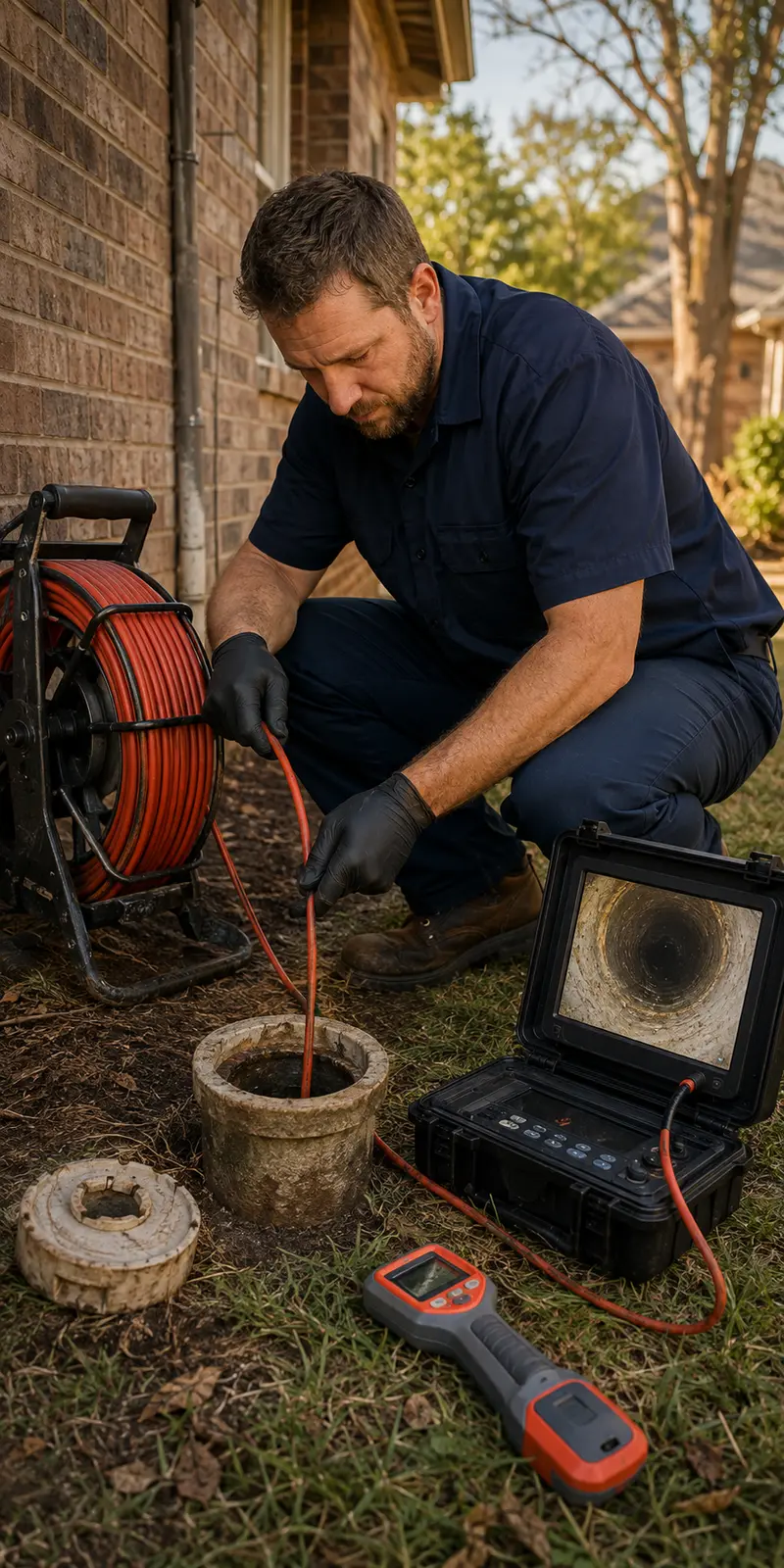
If one drain remains slow after basic cleaning—or multiple drains are affected—have the system evaluated. Professional drain cleaning, hydro jetting, or a sewer camera may be recommended after the cause is identified.
Need help with this problem?
Get a Clear Diagnosis and Practical Options.
This article provides general plumbing information and cannot diagnose a specific property. Conditions, codes, access, and repair requirements vary. For a suspected gas leak, leave immediately. From a safe location, call your gas utility, then call MRC Plumbing Solutions at 972-357-1400. Stay away until the utility says it is safe. For fire, injury, or other immediate danger, contact local emergency services.