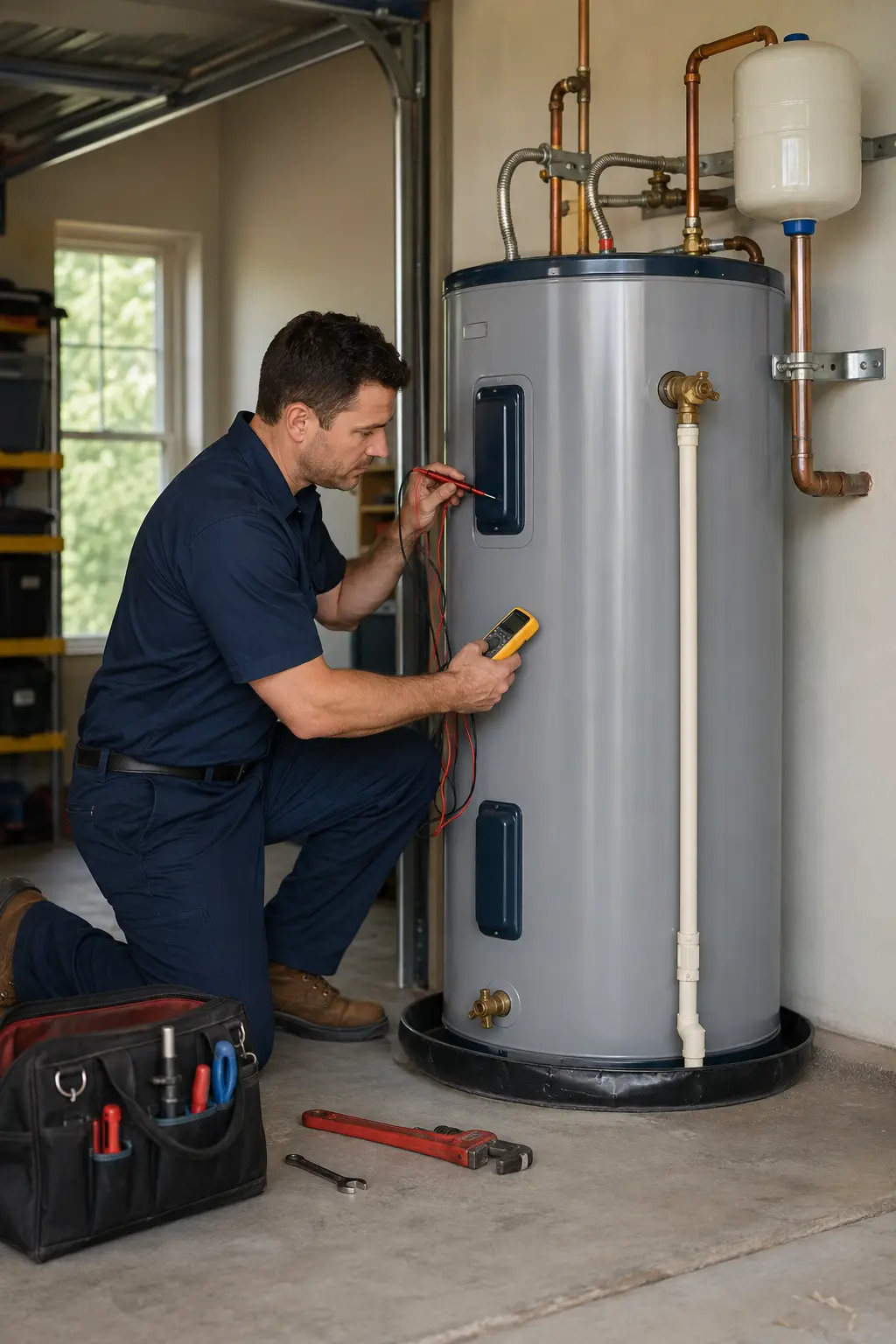
Age, corrosion, unusual noise, and changing hot-water performance can warn you before a tank fails.
Performance Changes Matter
A water heater that suddenly delivers less hot water, changes temperature, or takes longer to recover may have sediment buildup, a failing heating component, burner trouble, or a control problem.
- Popping or rumbling sounds
- Rust-colored or cloudy hot water
- Moisture in the drain pan
- Corrosion around connections
- Repeated resets or pilot problems
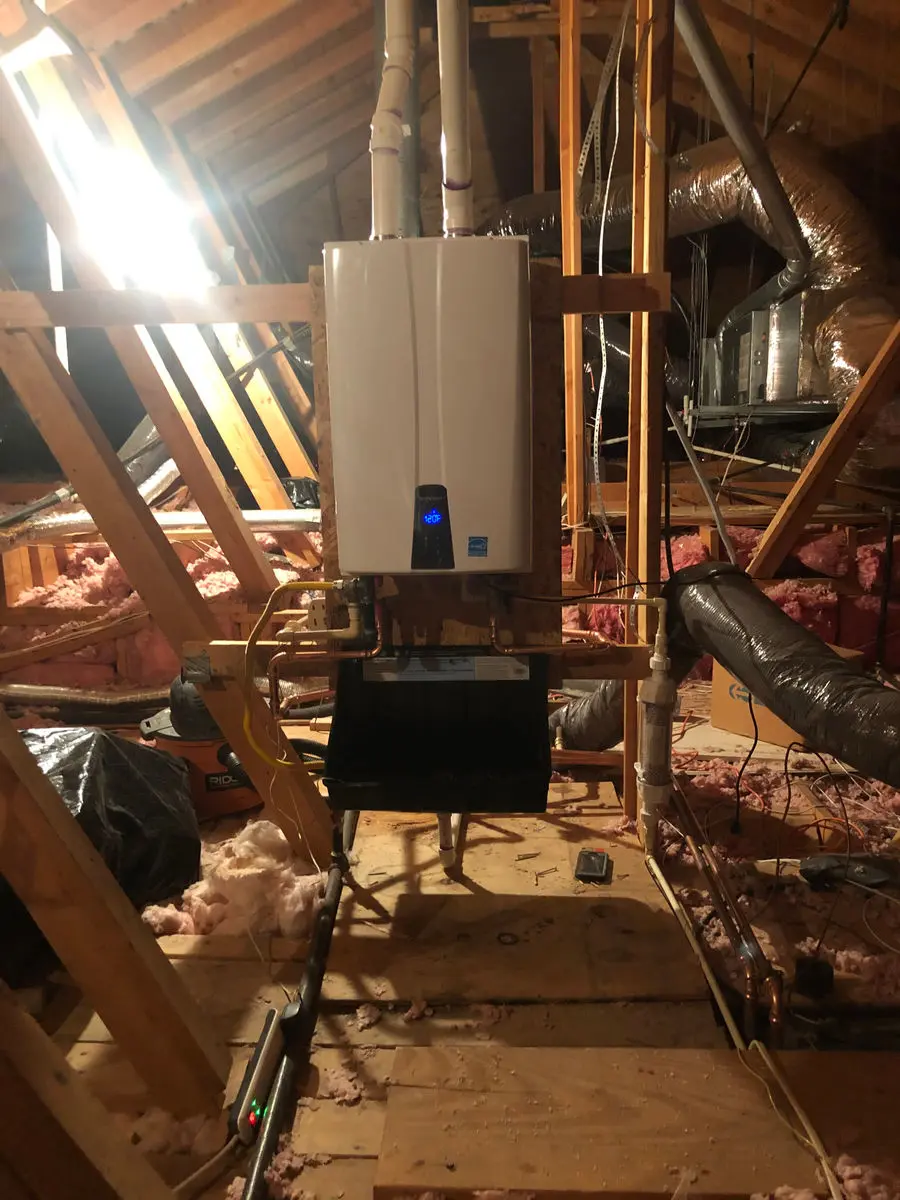
Attic Units Deserve Extra Attention
Many North Texas homes have water heaters above finished living space. A leaking tank can damage ceilings, insulation, drywall, and electrical components below. Inspect the visible area periodically and never ignore water in the pan.
Repair or Replace?
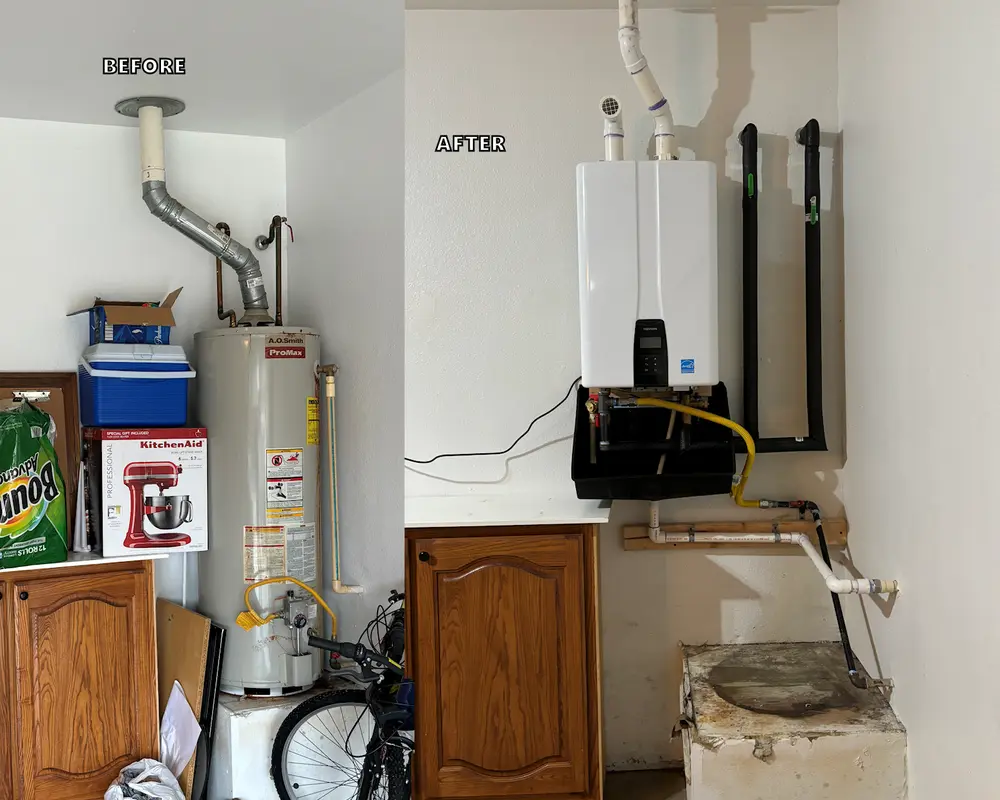
The answer depends on age, tank condition, repair history, efficiency, installation quality, and the cost of the failed part. A professional evaluation should explain the practical repair and replacement choices before work begins.
Need help with this problem?
Get a Clear Diagnosis and Practical Options.
This article provides general plumbing information and cannot diagnose a specific property. Conditions, codes, access, and repair requirements vary. For a suspected gas leak, leave immediately. From a safe location, call your gas utility, then call MRC Plumbing Solutions at 972-357-1400. Stay away until the utility says it is safe. For fire, injury, or other immediate danger, contact local emergency services.