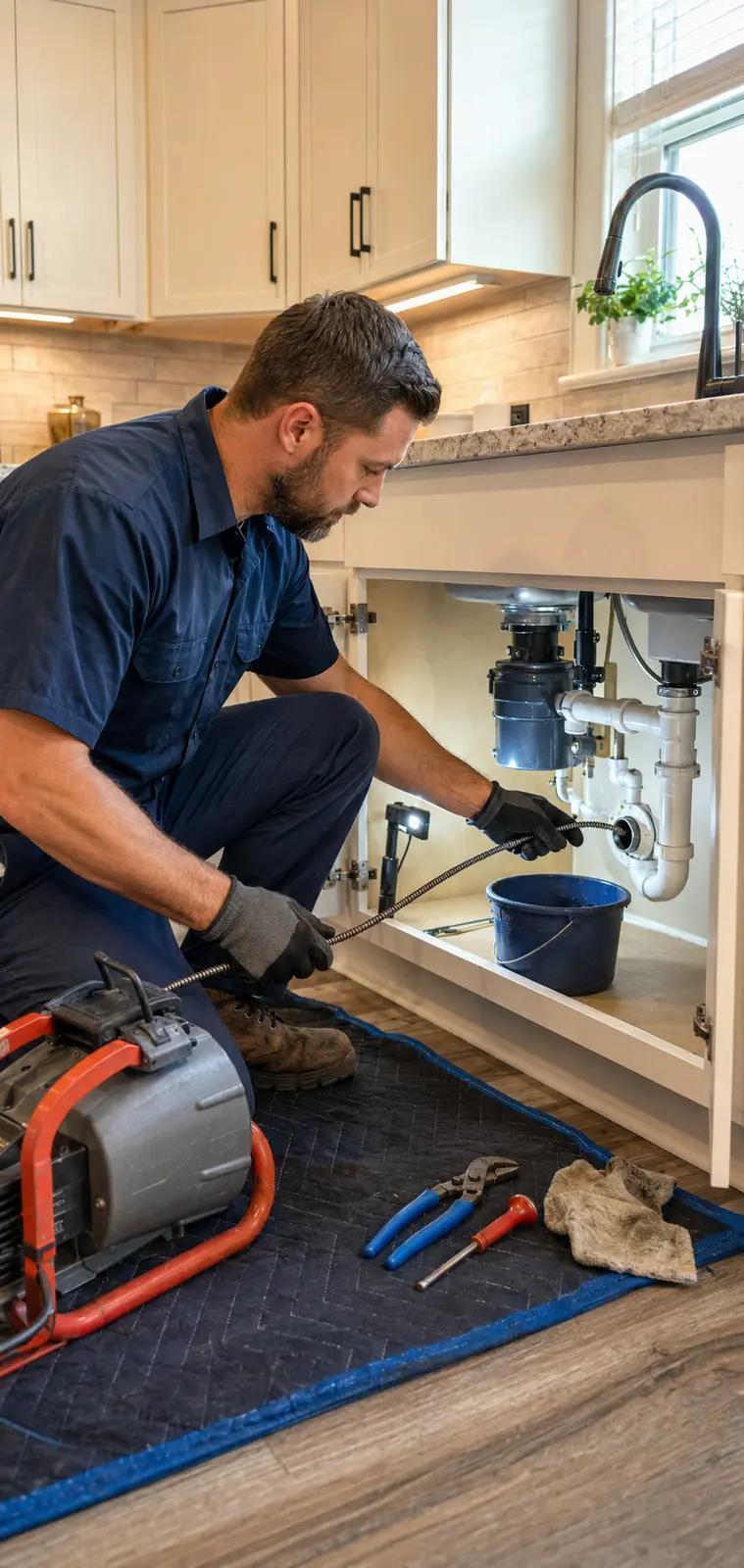
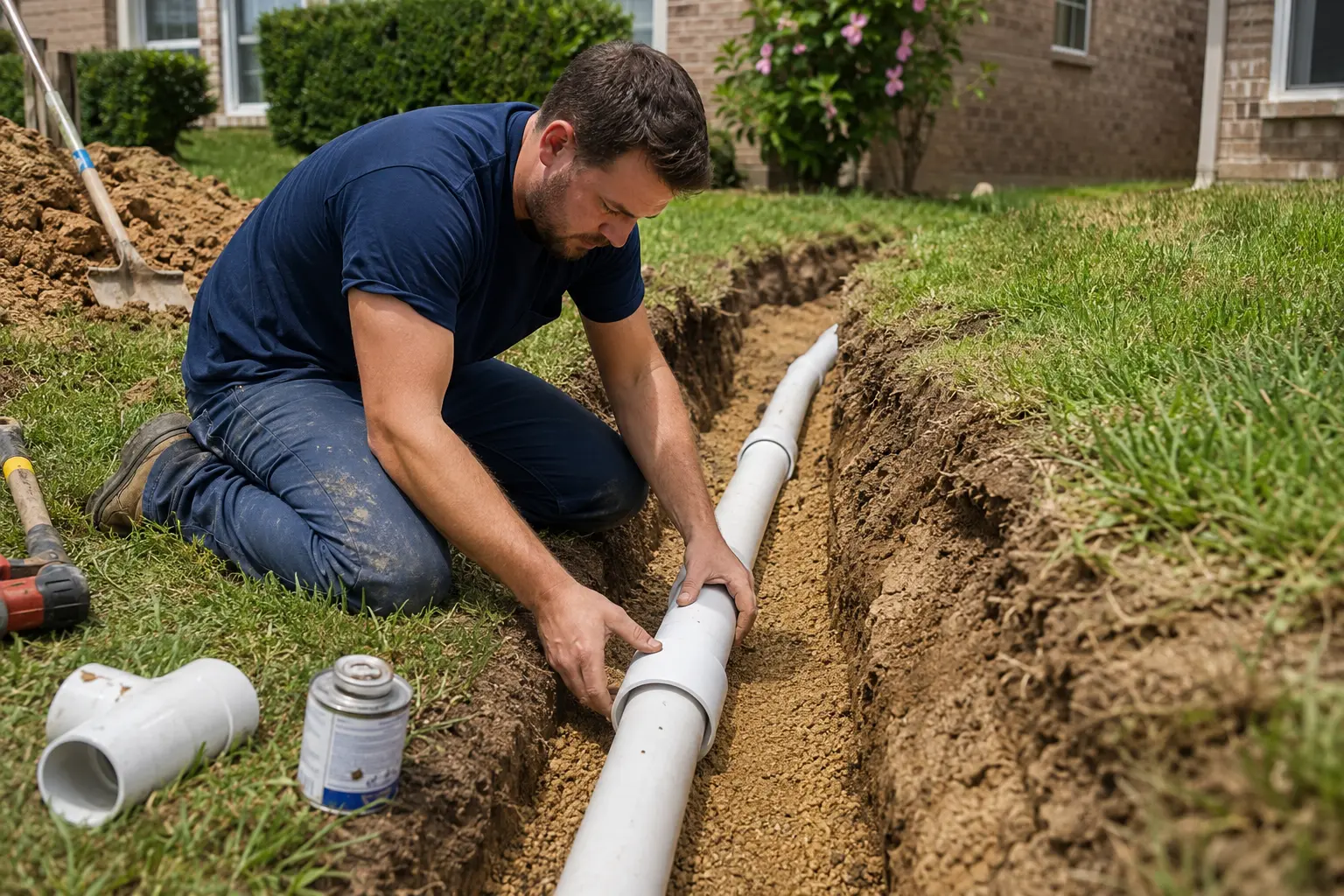
Recurring backups, gurgling drains, odors, yard changes, and pest activity can point to a damaged main sewer line.
What the Main Sewer Line Does
The main line carries wastewater from toilets, sinks, tubs, and drains to the public sewer. A blockage, offset, break, belly, or collapse can restrict that flow and send wastewater back toward the property.
Common North Texas Warning Signs
One slow fixture may be a local clog. Several affected fixtures suggest the problem may be farther downstream.
- Multiple slow or gurgling drains
- Repeated toilet backups
- Sewer odor indoors or outside
- Unusually wet or sunken yard areas
- Mold, staining, insects, or rodents near plumbing areas
How Damage Is Confirmed
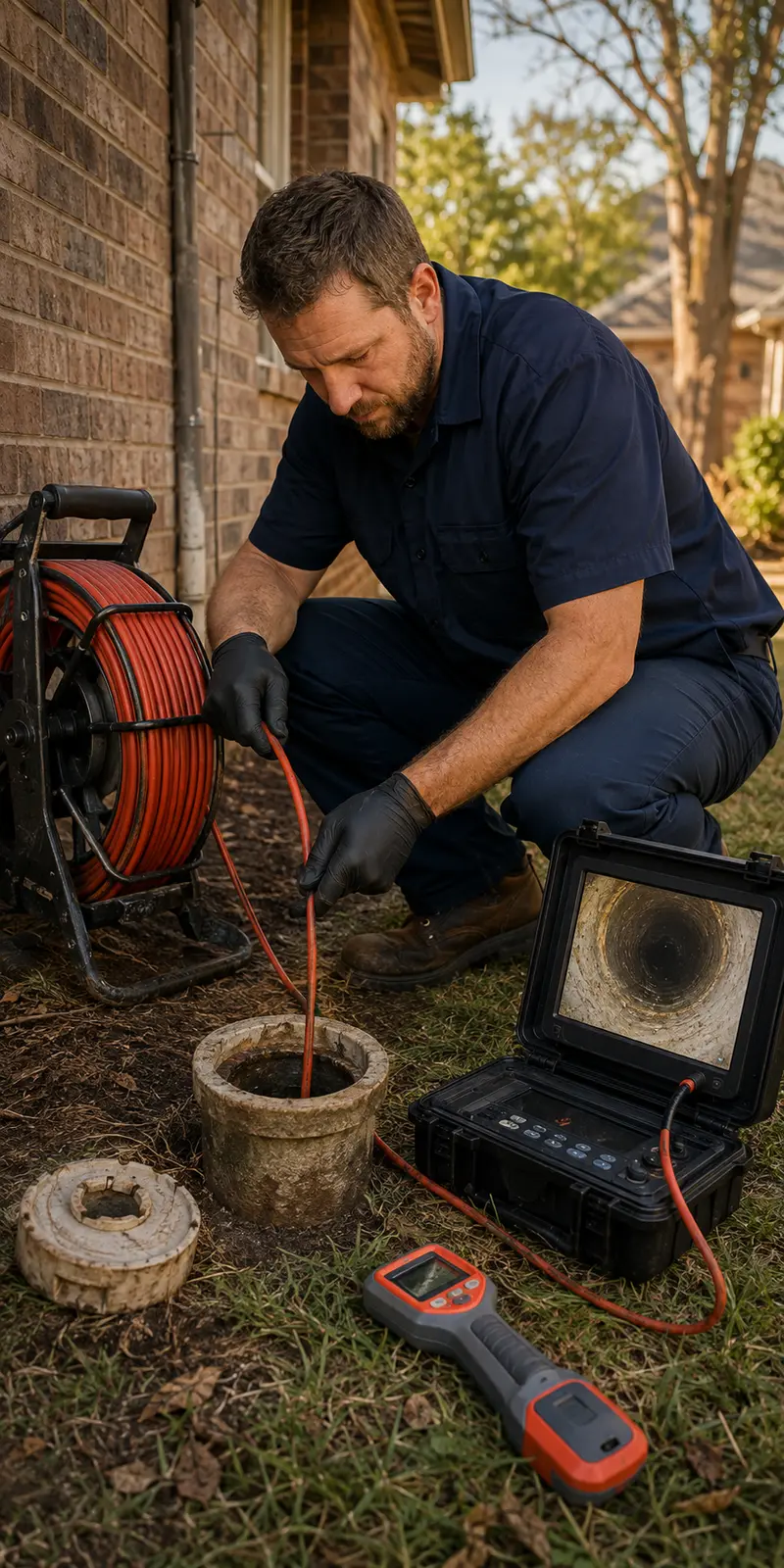
A sewer camera can document the inside of the line, while locating equipment helps identify the position and depth of important findings. If the line is structurally sound, cleaning or hydro jetting may help. Cracked, collapsed, or badly deteriorated piping may require targeted repair or replacement.
What to Do During a Backup
Reduce water use, keep people away from sewage, avoid chemical drain cleaners, and call for professional help. Describe which fixtures are affected and what happened before the backup.
Need help with this problem?
Get a Clear Diagnosis and Practical Options.
This article provides general plumbing information and cannot diagnose a specific property. Conditions, codes, access, and repair requirements vary. For a suspected gas leak, leave immediately. From a safe location, call your gas utility, then call MRC Plumbing Solutions at 972-357-1400. Stay away until the utility says it is safe. For fire, injury, or other immediate danger, contact local emergency services.